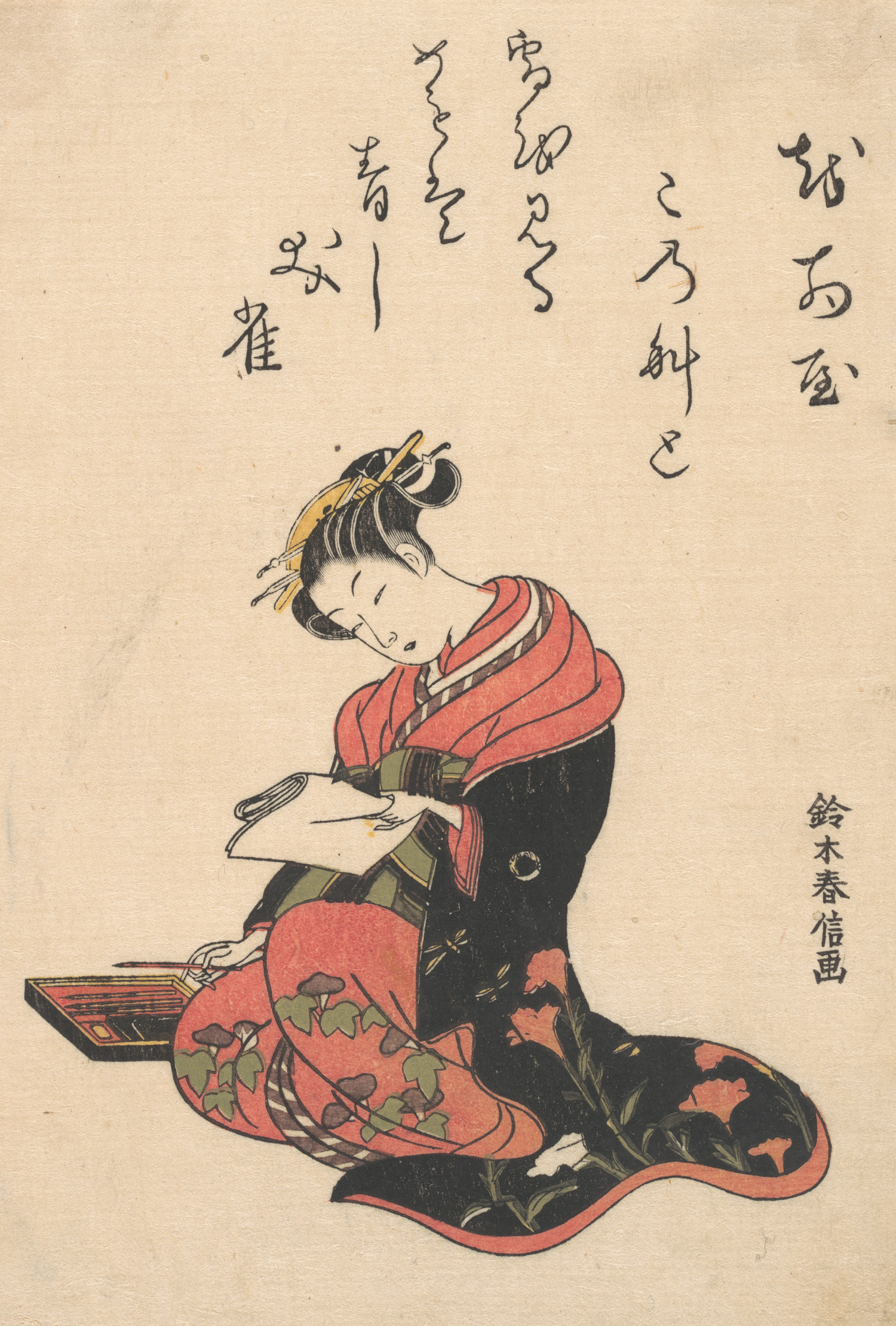
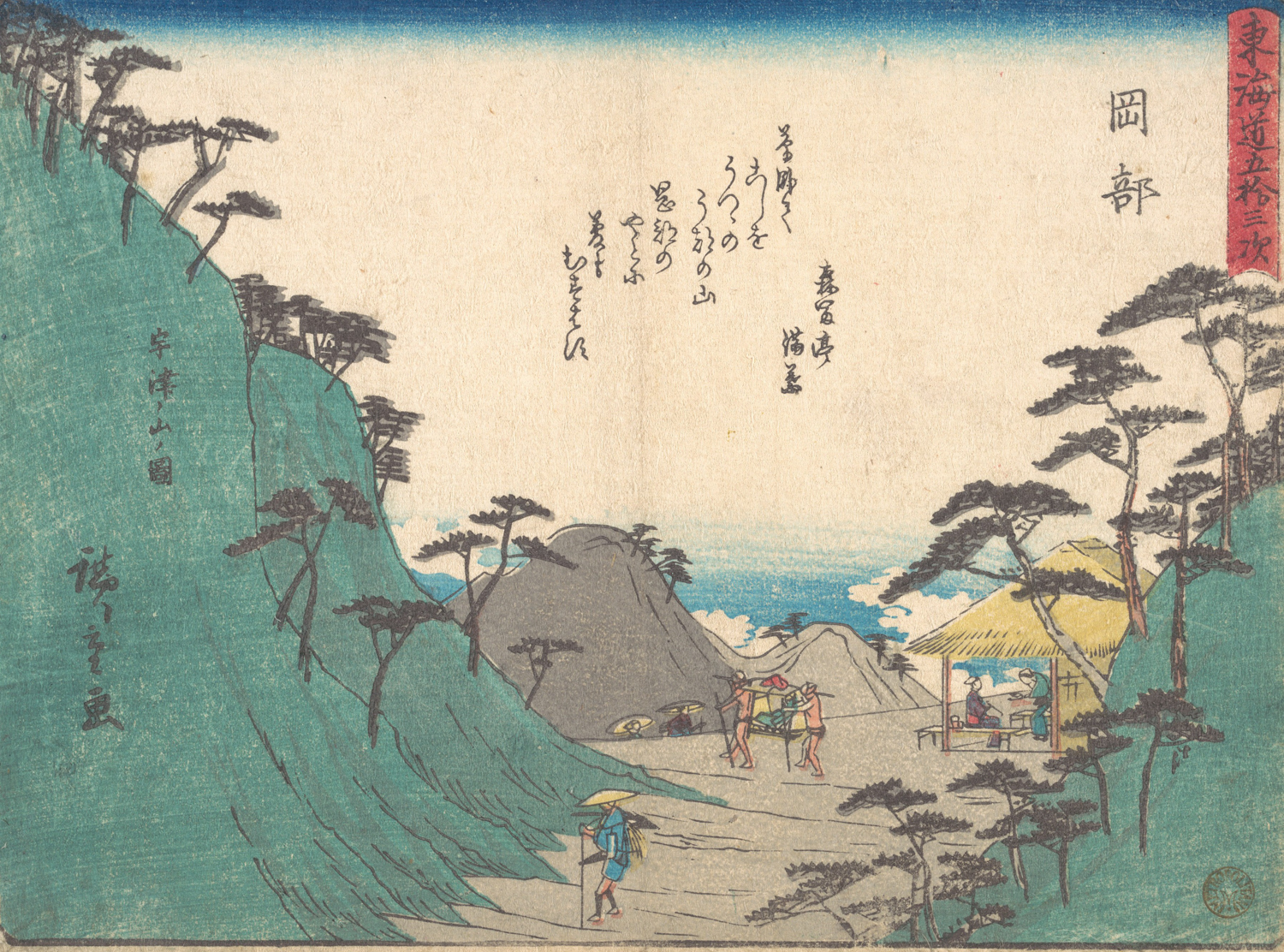
In the 18th and 19th centuries, Ukiyo-e, or pictures of the “floating world,” were extremely popular with Japanese and foreigners alike. Beato’s hand-colored photographs could compete admirably the ukiyo-e woodblock prints. The subjects of his photographs often mimic those found in ukiyo-e, which were related to entertainment—geisha, actors, sumo, theatres, and the like—as well as scenes of daily life and travel. Since the late 1850s, Americans and Europeans avidly collected ukiyo-e prints. Many of the collectors, such as the Bostonian William Sturgis Bigelow, purchased both woodblock prints and photographs, and they chose similar subjects in each medium.
Harunobu Suzuki (1725?-1770) was one of the first Japanese artists to use color in his woodblock prints, which were primarily of elegant “beauties,” or courtesans.
Hiroshige Ando (1797-1858) is best known for his series of prints depicting the 53 way stations along the Tokaido Road where travelers could obtain lodging, supplies, and fresh pack animals.