Samurai

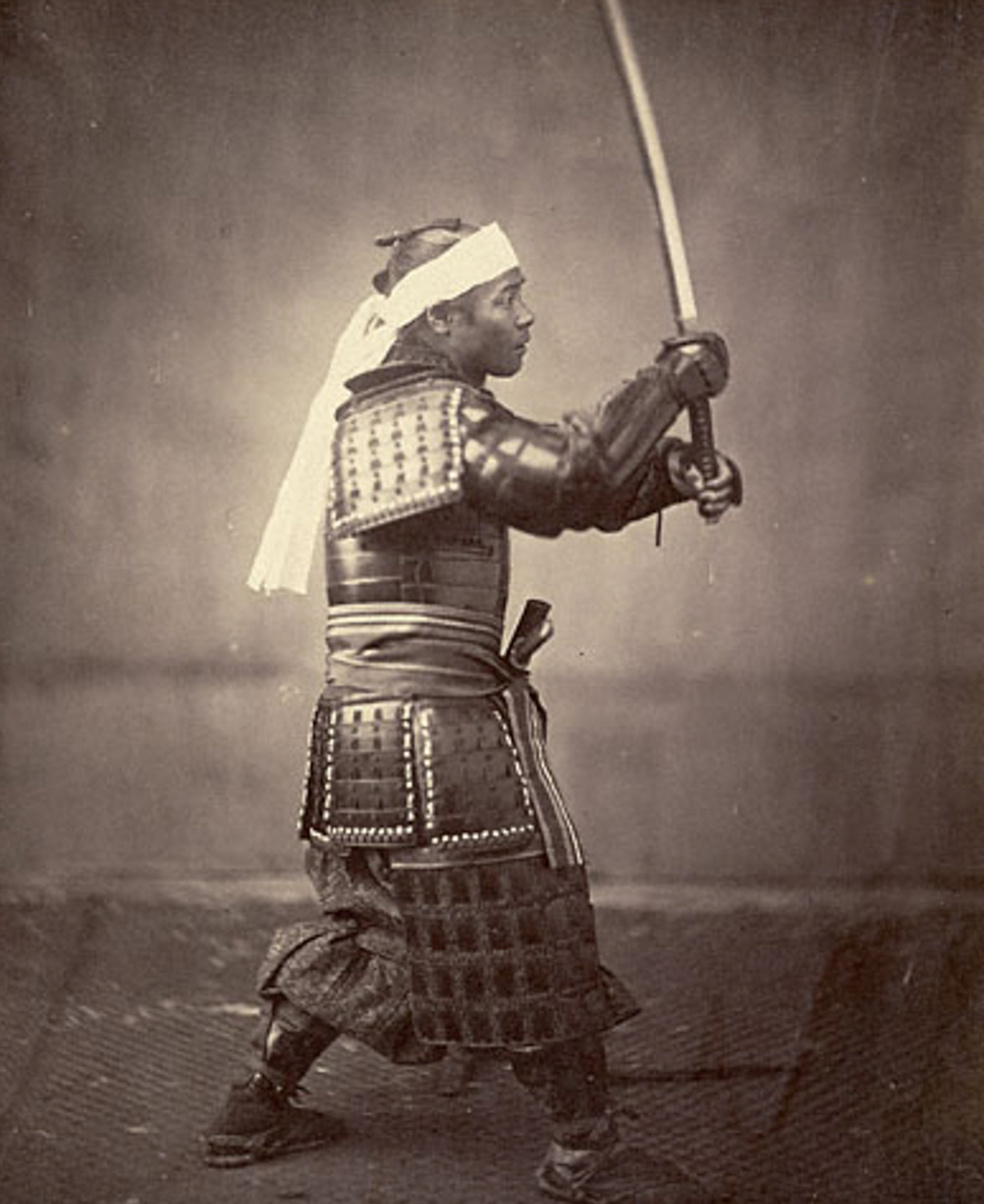
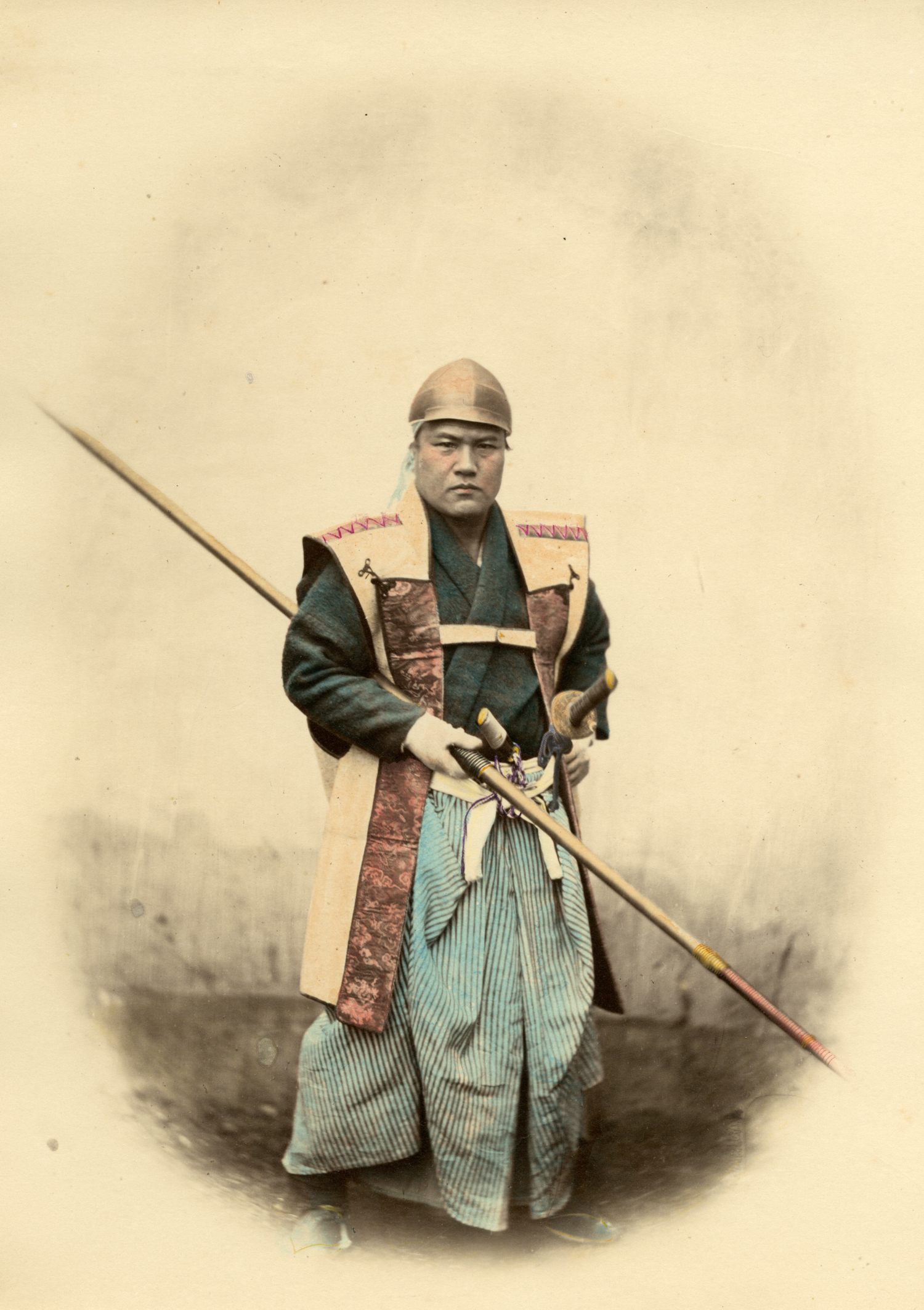
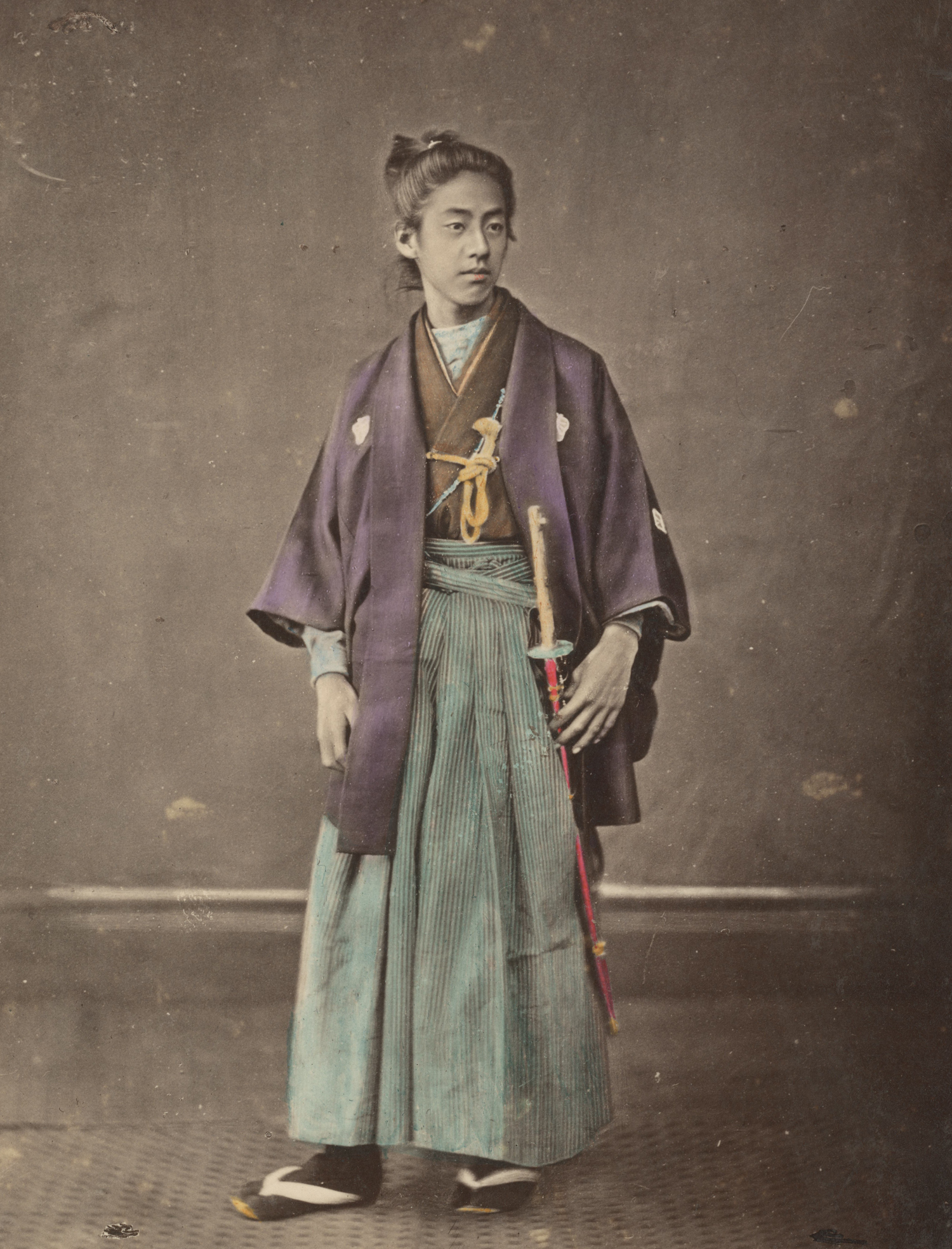
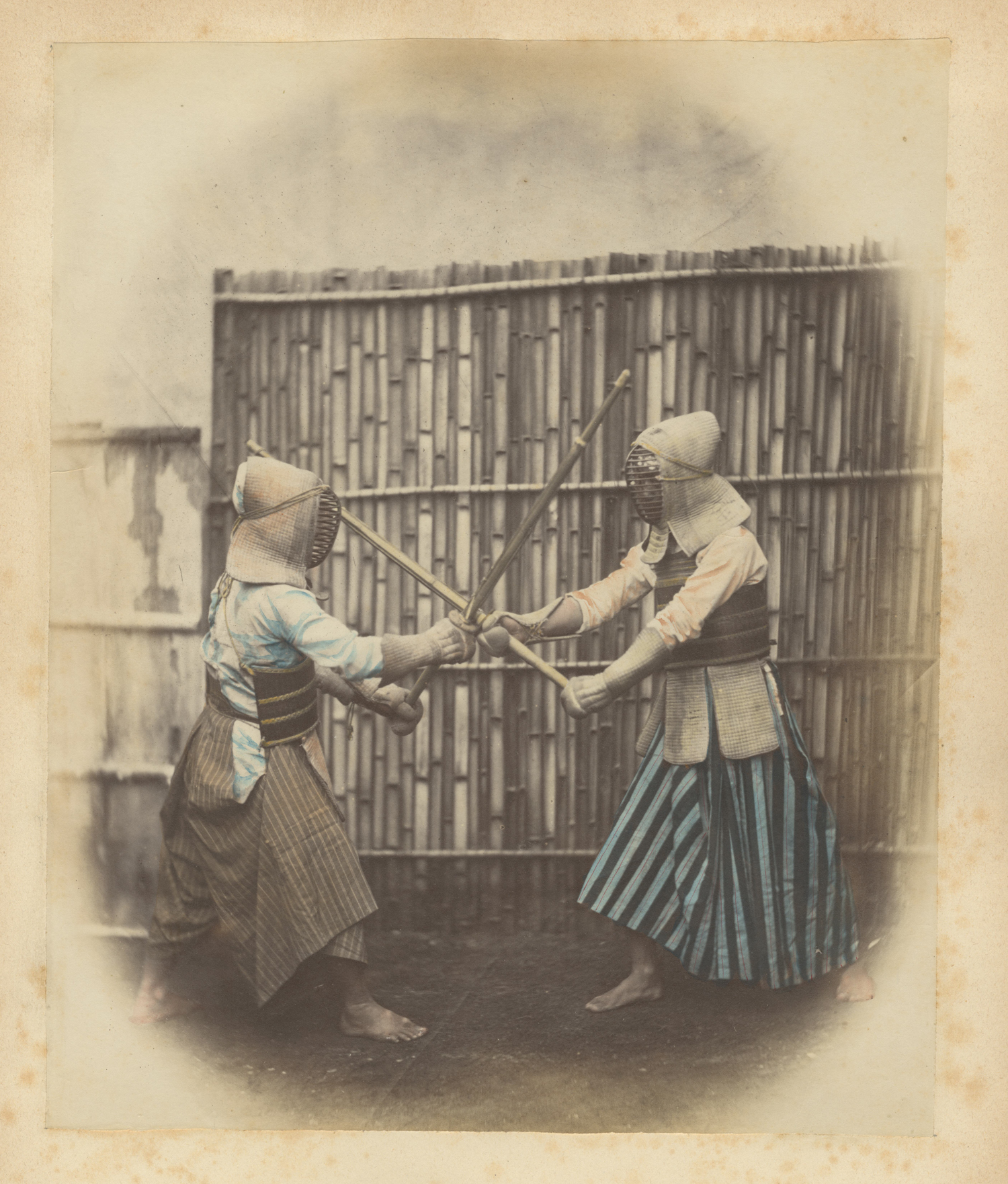
On the other end of the spectrum from the geisha was the samurai, the epitome, at least in the Western imagination, of Japanese masculinity. Beato posed men in “ancient armor” and practicing kendo, a form of fencing samurai used to keep fit and prepared for battle.

However, in the 1860s, the status of the samurai was changing. Samurai were in a constant battle to hang on to their military roles and social status. By Beato’s time, samurai rarely wore their armor, for it had become primarily a collectors’ item rather than a necessity of war.

In 1873, the Emperor abolished the samurai class altogether. So, Beato was in this case really showing something that was quickly disappearing from Japanese society.
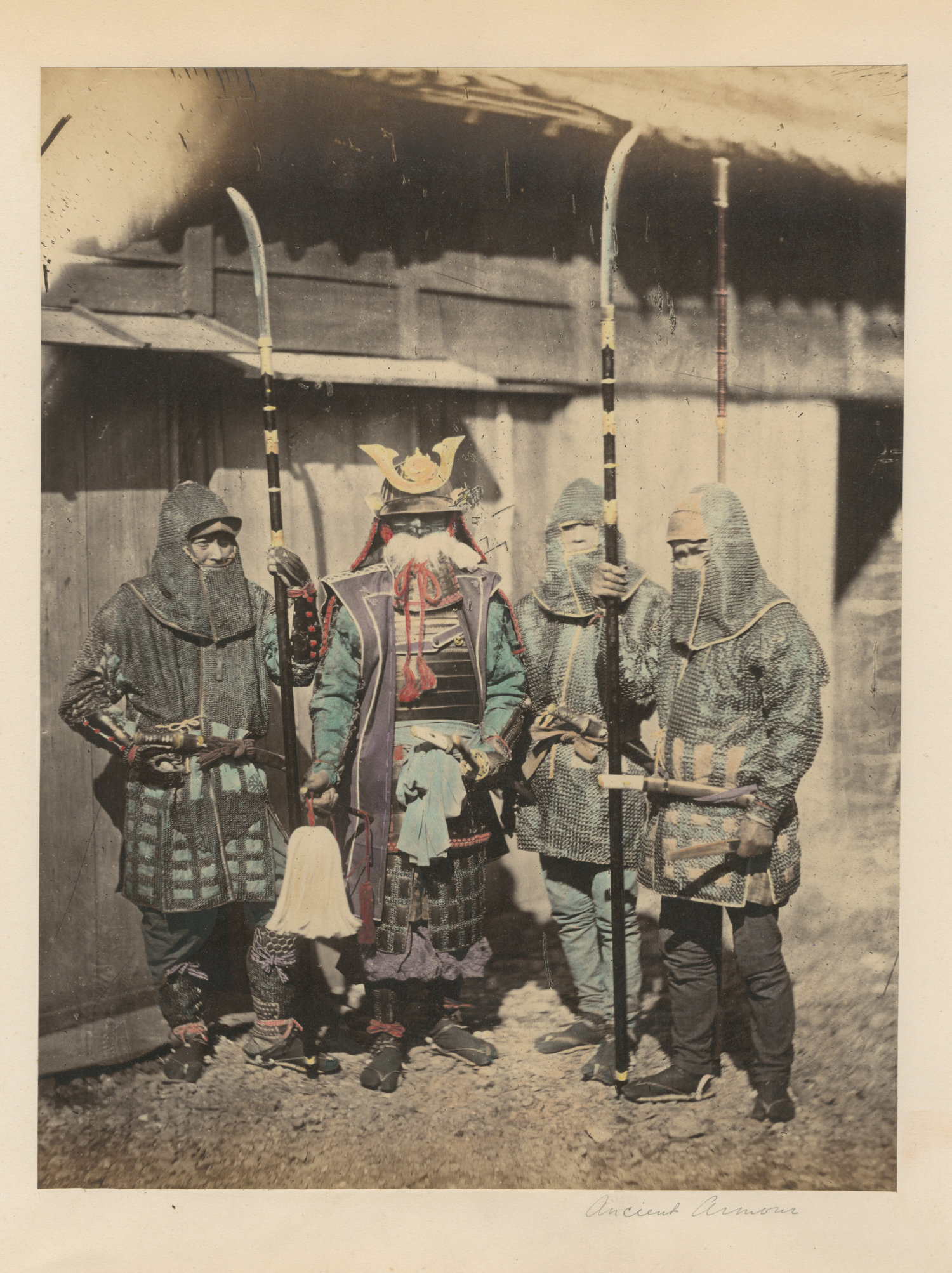
Ancient Armour, about 1867–68. Hand-colored albumen silver print.
Kendo, about 1867–68. Hand-colored albumen silver print.
Standing Samurai with Sword, Nagasaki, 1864. Hand-colored albumen silver print.
Samurai Warrior, about 1867–68. Hand-colored albumen silver print.
Young Man from Satsuma Clan, 1863. Hand-colored albumen silver print.
previous arrow
next arrow
 
<i>Ancient Armour,</i> about 1867–68. Hand-colored albumen silver print.
<i>Kendo,</i> about 1867–68. Hand-colored albumen silver print.
<i>Standing Samurai with Sword,</i> Nagasaki, 1864. Hand-colored albumen silver print.
<i>Samurai Warrior,</i> about 1867–68. Hand-colored albumen silver print.
<i>Young Man from Satsuma Clan,</i> 1863. Hand-colored albumen silver print.
previous arrow
next arrow